Home
Chemistry
Astronomy
Energy
Nature
Biology
Physics
Electronics
Science
>>
Science Discoveries
> >>
Astronomy
Moon Observatories: Why the Lunar Surface is Ideal for Astronomy
Kepler's Third Law: Orbital Period vs. Distance from Sun - Explained
Earth: The Watery Planet - Facts & Significance
Understanding the Moon's Phases: Why It Appears Dark
Star Formation: The Role of Gravity in Stellar Birth
The Sun's Colors: Why It Appears Yellow, White, and More
Galaxies: Billions of Stars in a Cosmic Collection
Brightest Stars in Leo: Regulus, Denebola & Algieba
Understanding Earth's Radiation Spectrum Peak: 10 Micrometers
Proxima Centauri: The Closest Star & Its Location in Southern Constellations
Understanding Constellations: Types, Formation, and Cultural Significance
Gravity and Inertia: The Forces Governing Planetary Orbits
Travel Time to the Milky Way at Light Speed: A Physics Explanation
Planets in Order: Closest to Farthest from the Sun
Understanding Solar and Lunar Motion: Gravity & Rotation
Calculating Orbital Period: Space Probe Orbit Around the Sun
How Far Back in Time Are We Looking When Observing Distant Stars?
Moonlight: Does the Moon Produce Its Own Light? - [Your Brand/Site Name]
Red Giant Evolution: Understanding Stellar Expansion Stages
Understanding the Sun's Gravity: Mass and Solar System Dynamics
Ionosphere Reflection: How Radio Waves Bounce Off Earth's Atmosphere
Exploring the Cosmos: Why Do Scientists Study Space?
Neutron Star Brightness: Comparing Luminosity to Other Celestial Objects
Unraveling Stellar Composition: How Astronomers Analyze Stars
The Third Largest Star in the Universe: What We Know
Who Studies Meteors? Understanding the Role of Astronomers
Distance Traveled by Light in a Day: A Detailed Calculation
Understanding Stars: Key Facts and Their Role in the Universe
NASA Venus Missions: A Historical Overview
Earth's Orbit: A Scientific Fact, Not a Controversy
Understanding Stars: Scientific Definitions and Characteristics
Asteroid Orbits: Understanding Elliptical Paths & Orbital Mechanics
First to See Moon's Craters: Galileo vs. Precursors
EBLM J0555-57Ab: Discovering the Universe's Smallest Star
How Astronomers Decipher Cosmic Signals: 4 Key Steps
Rayleigh Scattering: Why is the Sky Blue? - [Your Brand/Website Name]
Total
43966
-Science
FirstPage
PreviousPage
NextPage
LastPage
CurrentPage:
253
/1222
36
-Science/Page Goto:
1
247
248
249
250
251
252
253
254
255
256
257
258
259
Science Discoveries
Chemistry
Astronomy
Energy
Nature
Biology
Physics
Electronics
Geology
Solar Eclipse
Math
other
Nanotechnology
Astronomy
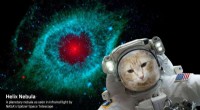
Explore the Cosmos: NASA Selfies & TRAPPIST-1 VR Apps Launch
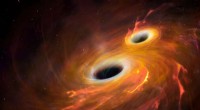
Upcoming Detectors Will Unveil Millions of Black Holes, Revealing the Universe’s Evolution
Philippines Confirms No Damage from Chinese Rocket Debris
Study Uncovers First Evidence of Powerful Winds Around Black Holes During Accretion Episodes
Harnessing Gravitational Lensing to Build a Galaxy‑Wide Internet
NASA's Webb Telescope to Probe Emerging Exoplanets at Their Edge
Mars Crust Revealed: New Gravity Map Indicates Porous Layer
|
Geology
|
Math
|
Solar Eclipse
Science Discoveries © www.scienceaq.com