Here's why:
* Early observations: Before Galileo, others had likely glimpsed the Moon's surface features through rudimentary telescopes. However, their observations were less detailed and lacked the clarity needed to definitively identify craters.
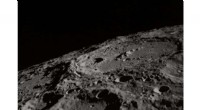
* Galileo's contribution: Galileo's observations were far more detailed and were documented with sketches. His work marked a significant advancement in our understanding of the Moon's surface, including the identification of craters, mountains, and plains.
* Thomas Harriot: Some historians argue that Thomas Harriot actually observed the Moon's craters *before* Galileo, possibly as early as July 1609. Harriot's drawings are less detailed than Galileo's, but they do show some craters. However, Harriot didn't publish his findings, and they remained unknown for centuries.
Therefore, while Galileo is historically recognized for his observations and detailed descriptions of lunar craters, it's possible that Harriot may have seen them first. The exact attribution remains a subject of debate among historians.