Home
Chemistry
Astronomy
Energy
Nature
Biology
Physics
Electronics
Science
>>
Science Discoveries
> >>
Chemistry
Nitrogen Atoms in Al(NO₃)₃: A Detailed Explanation
Understanding Low-Pressure Systems: Causes and Characteristics
Convert Moles of NaCl to Grams: A Simple Calculation
Barium Chloride Hydrate: Formula, Name & Types Explained
Ethanol Molecule: Counting Atoms (C2H6O)
Understanding Nitrogen's Lone Pair: Electronic Configuration & Bonding
Nitrogen Gas Production from Liquid Nitrogen: Understanding the Conversion
Understanding Chemical Equation Balance: Why It Matters
Balancing Chemical Equations: H₂ + N₂ → NH₃ - A Step-by-Step Guide
Number of Atoms in CCl₂F₂: A Simple Calculation
Understanding Chemical Compounds: Examples & Definitions
Bromine: Metal, Nonmetal, or Nonmetal? Properties & Position
Potassium Oxide (K₂O): Formation & Properties
Copper Sulfate: Understanding Ionic Compounds and Molecular Count
Law of Conservation of Mass: Predicting Product Mass in Chemical Reactions
Hydrogen Phase at STP: Understanding its Gaseous State
Carbon Fluoride Compounds: Formulas and Properties
Identifying Bases: Properties and Hydroxide Ion Production
Freezing Point Depression of Sodium with Calcium Chloride: Explained
Iron and Copper Sulfate Reaction: Understanding the Chemical Process
Physical Change: Understanding the Melting of Sodium Chloride (Salt)
Copper Chloride in Water: Particle-Level Reactions Explained
Mineral Crystal Growth: How Atoms Attach & Form Crystals
Identifying an Element with 10 More Protons than Sulfur (Fe)
Identifying Substances with Similar Metal-Nonmetal Ratios: A Chemistry Problem
Barium and Carbon: Ionic Compound or Molecular? - Chemistry Explained
Sodium Fluoride (NaF) Electron Configuration & Ionic Formation
Hydrogen Gas Chemical Symbol (H₂): Definition & Explanation
Molecular Geometry of Nitrogen Tribromide (NBr₃): A Detailed Explanation
Sodium Atoms Per Mole: Understanding Avogadro's Number
Gallium Ions: Exploring Ga³⁺ and Ga⁺ Forms
Copper, Ammonium Hydroxide, and Hydrogen Peroxide Reaction: Chemistry Explained
Understanding Oxidation: Why Oxygen is Called an Oxidizer
Compounds: Understanding Chemical Reactions and Pure Substances
Minerals vs. Mineraloids: Understanding Crystalline Structure
Condensation: What Happens When Water Vapor Turns to Liquid?
Total
64342
-Science
FirstPage
PreviousPage
NextPage
LastPage
CurrentPage:
594
/1788
36
-Science/Page Goto:
1
588
589
590
591
592
593
594
595
596
597
598
599
600
Science Discoveries
Chemistry
Astronomy
Energy
Nature
Biology
Physics
Electronics
Geology
Solar Eclipse
Math
other
Nanotechnology
Chemistry
Eco-Friendly Alcohol Substitution: Phosphine Oxide Catalyst Enhances Nucleophilic Reactions
Synthesis Reactions Explained: How Two or More Reactants Form a New Compound
How to Determine If a Substance Is Acidic: A Practical Guide
Targeted Modification of Cellular Lipids Promises New Therapeutic Advances
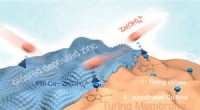
Enhancing Zinc‑Based Battery Performance with Turing Membrane Technology
Why the Eukaryotic Cell Nucleus Mirrors a Superstore Layout
Will Space Debris Naturally Decompose? Understanding the Longevity of Orbital Trash
|
Geology
|
Math
|
Solar Eclipse
Science Discoveries © www.scienceaq.com