Here's a breakdown:
* Water vapor is the gaseous state of water. It's invisible to the naked eye.
* Condensation is the process where water vapor changes from a gas to a liquid. This happens when the air cools down and can no longer hold as much water vapor.
* Liquid water is the familiar form of water we see in puddles, lakes, and oceans.
This process is responsible for many natural phenomena like:
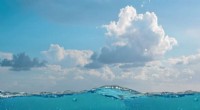
* Clouds: Formed by condensation of water vapor in the atmosphere.
* Dew: Formed when water vapor in the air condenses on cool surfaces at night.
* Rain: Formed when water droplets in clouds become heavy enough to fall to the ground.