Here's why:
* Minerals are naturally occurring, solid substances with a defined chemical composition and a specific, ordered internal arrangement of atoms. This ordered arrangement creates a crystalline structure, which can be seen in the mineral's shape, cleavage, and other physical properties.
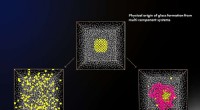
* Mineraloids are also naturally occurring, solid substances, but they lack a defined crystalline structure. They are often amorphous, meaning their atoms are arranged randomly.
Examples:
* Quartz is a mineral with a defined chemical composition (SiO2) and a specific crystalline structure.
* Opal is a mineraloid. It is made of silica (SiO2), but it doesn't have a defined crystalline structure. Instead, it's amorphous, with a random arrangement of silica molecules.
In summary, the defining characteristic that separates minerals from mineraloids is their crystalline structure. Minerals have a specific, ordered arrangement of atoms, while mineraloids lack this structure and are amorphous.