Here's why:
* Molecular Compounds: Formed by the sharing of electrons between nonmetal atoms. These compounds exist as discrete molecules with a specific number of atoms bonded together. Examples: water (H₂O), carbon dioxide (CO₂).
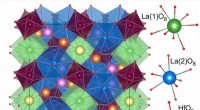
* Ionic Compounds: Formed by the electrostatic attraction between positively charged ions (cations) and negatively charged ions (anions). These compounds do not exist as individual molecules but rather as a three-dimensional lattice structure.
Copper sulfate (CuSO₄) is an ionic compound. It consists of copper(II) ions (Cu²⁺) and sulfate ions (SO₄²⁻). When dissolved in water, these ions separate and move independently.
Therefore, it's not meaningful to talk about "molecules" in copper sulfate. Instead, we talk about the formula unit, which represents the simplest ratio of ions in the compound.