Home
Chemistry
Astronomy
Energy
Nature
Biology
Physics
Electronics
Science
>>
Science Discoveries
> >>
Chemistry
Crafting Strong Scientific Conclusions: Key Components & Best Practices
Sublimation: Understanding the Solid-to-Gas Phase Change
Shared Properties of Acids and Bases: A Comprehensive Overview
Accurate Liquid Measurement: Choosing the Right Instrument
Radioactive Elements: Types, Examples & Uses
Understanding Organic Compounds: The Role of Carbon
Elements: Definition, Properties, and Examples
Historical Uses of Electrolysis by Early Scientists
Scientific Notation: Representing Temperature and Pressure in Experiments
Understanding Ions: Charged Particles Formed by Electron Transfer
Sodium Ion Charge: Understanding Electron Configuration and Ionic Charges
Iodide Ion (I⁻): Protons & Electrons Explained
Radicals in Science: Definition, Examples & Reactivity
The Scientific Revolution: Transforming Scientific Methods
Chlorine Gas vs. Argon: Diffusion Rates Explained - Chemistry Concepts
How Cooling Affects Gas Molecule Speed: A Scientific Explanation
Understanding 54 Gallons: What's the Volume?
Essential Lab Tools: How They Enhance Scientific Observation
Metal Melting Points: A Comprehensive Guide by Fahrenheit
Gas Particle Spacing: Understanding Density and Compressibility
Understanding UV Calibration: Why Toluene & Hexane Aren't Ideal
Plasma Applications: Uses of the Fourth State of Matter
Understanding the Relationship Between Atoms and Nuclear Forces
Physical vs. Chemical Change: Understanding Broken Objects
Mitochondrial Membrane Potential: Understanding the Proton Gradient
Asbestos as an Insulator: Properties, Risks & Health Concerns
Carbon Dioxide Production from Glucose Oxidation: A Detailed Explanation
Safe vs. Hazardous Liquids: A Comprehensive Guide
Metals: Conductors vs. Insulators - Understanding Electrical Conductivity
Chalk vs. Liquid Erasers: Which is Better? - Pros & Cons
Anions vs. Cations: Understanding Opposing Charges
Endothermic Processes: Definition, Examples & Real-World Applications
Chemical vs. Physical Change: Why Milk Turns Sour
Mannitol Salt Agar (MSA): Selective Agent & How It Works
Dissolution Rate: Comparing Solid vs. Gas in Liquids - Factors & Methods
Dissolving Excess Solute: Methods & Explanations
Total
64342
-Science
FirstPage
PreviousPage
NextPage
LastPage
CurrentPage:
833
/1788
36
-Science/Page Goto:
1
827
828
829
830
831
832
833
834
835
836
837
838
839
Science Discoveries
Chemistry
Astronomy
Energy
Nature
Biology
Physics
Electronics
Geology
Solar Eclipse
Math
other
Nanotechnology
Chemistry
Reclaimed Waste Plastic: A Breakthrough Material That Degrades Within a Year
Quantum Sensor Detects Neurological Disorders Early
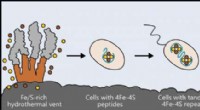
Scientists Trace the Origins of Metabolism to Iron‑Sulfur Hydrothermal Vents
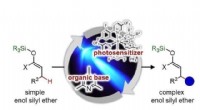
Selective C–C Bond Formation at Inert Enol Silyl Ether Sites
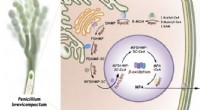
Scientists Unlock the Biosynthetic Pathway of Immunosuppressive Drug Mycophenolic Acid
Understanding the Longevity of Muscle–Tendon Connections
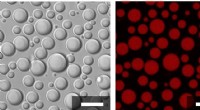
Did Early Life Necessitate Long, Complex Molecules to Create Cell‑Like Compartments?
|
Geology
|
Math
|
Solar Eclipse
Science Discoveries © www.scienceaq.com