By Adrianne Jerrett – Updated Aug 30, 2022
MirkaMoksha/iStock/GettyImages
Fluorite and quartz look remarkably alike in the hand, yet their chemistry, structure, and hardness differ significantly. Identifying them correctly is essential for collectors, geologists, and anyone working with minerals. This guide explains the key distinctions and offers a simple, reliable test based on hardness.
Minerals are naturally occurring, inorganic solids formed under Earth’s pressure and temperature conditions. Each mineral is defined by a unique chemical composition and an orderly, repeating atomic lattice. The most common classification separates them into silicates—primarily made of silica (SiO2)—and non‑silicates, which lack the silicon‑oxygen framework.
Quartz is the Earth's most abundant silicate mineral, composed of silicon dioxide. It crystallizes in the trigonal system, giving it a characteristic hexagonal symmetry. Pure quartz is transparent, but trace impurities produce a wide palette of colors—from amethyst’s deep violet to citrine’s warm yellow.
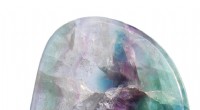
Fluorite, or calcium fluoride (CaF2), is a non‑silicate halide mineral. Its cubic crystal structure yields a highly symmetrical appearance, often described as “table‑salt” like. Fluorite’s color range is extensive, from clear to vivid shades of purple, blue, yellow, and green. Some specimens exhibit fluorescence under ultraviolet light.
Hardness measures a mineral’s resistance to scratching. The Mohs scale, developed by German geologist Friedrich Mohs in 1812, ranks minerals on a scale of 1 (talc) to 10 (diamond). Each level can be scratched by the next higher one.
Because quartz is three points harder than fluorite, a quartz crystal will scratch a fluorite sample, whereas fluorite cannot scratch quartz. In practice, a simple scratch test—using common objects like a copper penny (hardness 3.5) or a knife blade (hardness 5.5)—can reveal a mineral’s identity.
Fluorite’s calcium‑fluorine bonds are less tightly packed than quartz’s silicon‑oxygen tetrahedra, rendering fluorite softer. The cubic symmetry of fluorite also allows for more uniform cleavage, whereas quartz’s trigonal arrangement contributes to its greater hardness.
While quartz and fluorite share visual similarities, their distinct chemical makeup and hardness values make them easily distinguishable with a straightforward scratch test. Understanding these differences not only aids identification but also deepens appreciation for the diversity of Earth’s mineral kingdom.