By Ethan Shaw, Updated August 30, 2022
Alex/iStock/GettyImages
Weathering is a slow yet powerful geological force that disintegrates or dissolves rocks, shaping the surface and supplying the essential parent material for soil formation. The vulnerability of a rock to weathering depends largely on its mineral composition, but climate, structural integrity, and local geomorphology also play pivotal roles.
Weathering breaks down rock through mechanical or chemical means. Rock type, mineralogy, and climate determine resistance, with quartz typically outlasting micas and feldspars.
Weathering proceeds via mechanical (physical) processes—such as ice wedging, salt crystallization, and pressure unloading—and chemical processes that alter mineral chemistry through reactions with air, water, and acids.
Mineral stability is the cornerstone of weathering resistance. Quartz, a robust silicate, resists weathering far more than micas, which in turn outlast feldspars. However, a rock’s overall durability hinges on its whole-rock composition. For instance:
Climate steers the dominant weathering mode. In arid regions, mechanical weathering predominates, while humid climates foster intense chemical weathering. Limestone illustrates this dichotomy: it readily dissolves in humid, acidic environments to form karst features like caves, yet remains comparatively robust in deserts, producing dramatic scarps.
Notable examples include the Grand Canyon, where silica‑rich sandstone and conglomerate form resilient cliff bands that resist erosion, while softer shales erode into gentle strata beneath them.
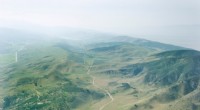
Where multiple rock types coexist, their relative resistance sculpts the terrain. Resistant units become ridges or highlands, whereas weaker units carve valleys. In the Appalachian Valley‑and‑Ridge Province, sandstone and conglomerate form ridges, whereas limestone and shale create valleys.
Granite outcrops often manifest as domes, walls, or boulder fields—landforms largely produced by exfoliation, a mechanical weathering process that removes overburden and releases internal pressure.
By fragmenting rocks and liberating minerals, weathering supplies the parent material that underpins soil formation. Rock type dictates the resulting soil texture and fertility:
Understanding these relationships helps geologists, land managers, and farmers predict landscape evolution and soil potential.