By Hayley Ames • Updated Aug 30, 2022
Image credit: Razvan/iStock/GettyImages
The dynamic interactions between Earth’s tectonic plates drive some of the planet’s most spectacular landforms. Though these processes unfold over millions of years, the resulting features—ranging from towering mountain ranges to deep ocean trenches—offer a window into the planet’s inner workings.
TL;DR – Plate tectonics generate dramatic large‑scale landforms: convergent boundaries create fold mountains and ocean trenches; divergent boundaries form mid‑ocean ridges; island arcs arise from subduction of oceanic plates.
When two tectonic plates collide—whether both continental or one continental and one oceanic—the compressional forces push sedimentary layers upward, folding them into majestic mountain chains. These fold mountains typically appear along continental margins where thick sedimentary basins accumulate. The youngest fold mountains, such as the Himalayas, formed less than 100 million years ago and currently host the highest peaks on Earth. Older ranges—like the Appalachians and Urals—grew over 250 million years ago, have been extensively eroded, and stand lower in elevation.
Ocean trenches form at convergent boundaries where an oceanic plate is forced beneath a continental or another oceanic plate. The denser oceanic lithosphere sinks, carving a narrow, deep valley on the ocean floor. These trenches mark the most profound parts of the seafloor; the Marianas Trench, for instance, plunges nearly 36,000 feet below sea level, the deepest known point in the world’s oceans.
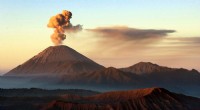
When one oceanic plate subducts beneath another, volcanic activity often follows along the trench. Over millions of years, magma generated by partial melting of the descending plate builds up, creating a chain of volcanoes that may rise above sea level as an island arc. The curvature of these arcs reflects the geometry of the subduction zone and the direction of plate motion.
At divergent boundaries, plates move apart, and magma from the mantle rises to fill the gap, forming new oceanic crust. This process creates mid‑ocean ridges—elongated volcanic mountains that flare upward where the plates separate. The Mid‑Atlantic Ridge is a textbook example, spreading at an average rate of 2.5 centimeters per year, gradually pushing the newly formed crust outward and building the ocean floor over millions of years.