Zedcor Wholly Owned/PhotoObjects.net/Getty Images
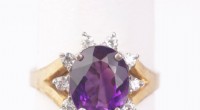
Gemstones are remarkable natural materials that capture the imagination far beyond their use in jewelry. Scientific experiments probe their physical traits—how they reflect light, respond to heat, or interact with radiation—to help gemologists and jewelers accurately characterize and identify them.
Color is a primary diagnostic tool for gemologists. Stones such as garnet never appear blue, allowing a process of elimination. The hue can be further described by its saturation—how vivid the color is—and its lightness or darkness. Opals, for example, exhibit a distinct speckled pattern and a play of color that is unique to the mineral. Transparency ranges from fully transparent, to semi‑transparent, to opaque. By shining a focused light through the stone, an expert observes how much light passes: complete transmission indicates transparency; no transmission signals opacity.
Hardness, measured on the Mohs Scale of Hardness established by Friedrich Mohs in 1812, is determined by scratching one gemstone against another of known hardness. If a stone can scratch a mineral rated 5.0, its hardness exceeds 5.0. Repeating the test with a range of reference minerals narrows the exact value, a key step in accurate identification.
Many commercially valuable stones undergo treatments to enhance or alter their appearance. Heat treatments, conducted in kilns at 200–2000 °C, remove unwanted chromophores—for instance, aquamarine’s natural green hue (a mix of yellow and blue iron impurities) becomes pure blue once the yellow component is eliminated. Irradiation uses controlled electromagnetic radiation to shift colors: a brown or yellow diamond can be turned green, blue, or pink, while pink tourmaline may become red.
While most gemstones are electrically insulating, a few display unique behaviors. The blue diamond is an exception, showing measurable electrical conductivity. Hematite, on the other hand, possesses a weak but detectable magnetic response. Recognizing these properties provides an additional layer of identification, especially when conventional optical tests yield ambiguous results.