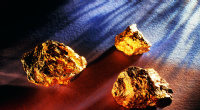
Gold, one of the most sought-after metals, occurs in a wide variety of geological settings. Two main deposit types dominate mining operations: primary (lode) and secondary (placer) deposits.
Primary deposits are formed when molten or semi‑molten rock (a "magma") is heated, cooled, or otherwise altered, creating a structure that incorporates gold. These so‑called "metamorphic‑rich" environments produce gold‑bearing veins that traverse sedimentary layers, typically found in rocks older than 2.5 billion years from the Archean eon. Common host rocks include granite, basalt, and komatiite, which provide the necessary chemical and physical conditions for gold to form.
Secondary deposits are created by erosion and gravity, producing a gold‑free‑zone structure. When a stream or river cuts through a gold‑bearing rock, it can transport gold particles into the surrounding sediments—an effect known as an "all‑thing." These deposits, also called "black sands," are dense and resistant to weathering, and they often contain other valuable minerals such as magetite, cassiterite, monazite, ilmenite, and even platinum group elements.
Gold is found on every continent. Notable mining regions include Northeast Canada, Brazil, Russia, the Democratic Republic of Congo, Egypt, Indonesia, Kazakhstan, and Australia. The ocean floor also hosts significant gold reserves within its sedimentary layers. Undersea mining offers access to vast deposits while limiting surface impacts, though economically viable techniques are still under development. The seafloor around Papua New Guinea is expected to become the next frontier as terrestrial deposits become exhausted.
Geopolitical stability directly influences the feasibility of gold mining. As of 2011, countries such as Canada, the United States, and Australia provide a stable environment conducive to profitable operations. Conversely, political turbulence in regions like South Africa can create supply uncertainties despite the country’s substantial gold output.