Home
Chemistry
Astronomy
Energy
Nature
Biology
Physics
Electronics
Science
>>
Science Discoveries
> >>
Chemistry
Element Order: What Comes Between Tellurium and Xenon on the Periodic Table?
Calculating Dichloromethane Yield from Methane Reaction: A Step-by-Step Guide
Helium Atom: Understanding Protons, Neutrons, and Electrons
Transition Metals and Air: Understanding Reactivity and Oxidation
Carbonate Salt Solubility: Factors & Solubility Trends
Understanding Nutrient Breakdown: The Digestive Process
Water Solubility of Breakdown Products: Context & Importance
Gas Volume and Temperature: Understanding the Relationship
Carbon Tetrachloride and Sulfuric Acid: Will It Sink?
Ionic vs. Covalent Bonds: Which is More Common?
DNA: The Molecule with the Power to Replicate
Cesium (Cs) and Cations: Understanding Ion Formation
Reaction Rate & Stoichiometry: Calculating Rate Laws Effectively
Structural Properties of Molecules: How Atomic Arrangement Matters
C₂H₂Cl₂ Molecular Polarity: Understanding Dipole Moments
Protons and Acidity: Understanding the Relationship
Understanding the Fate of Radioactive Isotopes After Nuclear Reactions
Buffer pH Calculation: Mixing Solutions with pH 4 & 6
Understanding Organic Compounds: A Comprehensive Guide
Liquid vs. Solid Solutions: Understanding the Differences
Cl2Na2: Why This Chemical Formula Is Invalid & What It Represents
Temperature's Effect on Density: A Comprehensive Explanation
Element Substitution in Compounds: A Detailed Explanation
Carbon: The Essential P-Block Element in Organic Compounds
Helium and Argon: Can Noble Gases Form Compounds?
Understanding Amorphous Solids: Formation and Characteristics
Titan's Composition: What is Saturn's Moon Made Of?
Gas, Liquid, Solid Particle Weight: Understanding the Difference
Understanding Intermolecular Forces in Solids
Physical vs. Chemical Change: Understanding Rock Fragmentation
Understanding the Effects of Heat on Fluids and Semi-Solids
Indium Carbonate Formula: In₂(CO₃)₃ Explained
Waste Oil Molecular Formula: Understanding the Complex Composition
Ionic vs. Covalent Compounds: Using Chemical Formulas for Identification
Understanding 'Like Dissolves Like': Polar & Nonpolar Solvents
Number of Atoms in an Indigo Molecule (C₁₆H₁₀N₂O₂)
Total
64342
-Science
FirstPage
PreviousPage
NextPage
LastPage
CurrentPage:
660
/1788
36
-Science/Page Goto:
1
654
655
656
657
658
659
660
661
662
663
664
665
666
Science Discoveries
Chemistry
Astronomy
Energy
Nature
Biology
Physics
Electronics
Geology
Solar Eclipse
Math
other
Nanotechnology
Chemistry
Silver Iodide: The Key Chemical Behind Cloud Seeding
Calculating Mean Annual Temperature: A Practical Guide for Climate Analysis
Rapid 10‑Minute SARS‑CoV‑2 Antibody Test Offers Unmatched Sensitivity
Researchers Unveil Advanced Cell‑Suction Technology
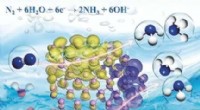
Efficient Ammonia Production via Nitrogen Electroreduction on Black Phosphorus Nanosheets
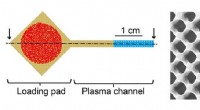
New Blood Test Strip Captures Clues Missed by Traditional Tests
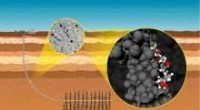
PNNL’s Self‑Healing Cement: Atom‑Level Simulations Reveal Its Inner Mechanisms
|
Geology
|
Math
|
Solar Eclipse
Science Discoveries © www.scienceaq.com