Home
Chemistry
Astronomy
Energy
Nature
Biology
Physics
Electronics
Science
>>
Science Discoveries
> >>
Chemistry
Dalton's Atomic Theory: Observations & Chemical Ratios
Sulfur Dioxide and Water: Formation of Sulfurous Acid (H₂SO₃)
Understanding Synthetic Materials: Nylon & Polyester Properties and Uses
Understanding Water's Polarity: Hydrogen Bonds & Unique Properties
What Can Store and Transport Molecules? (Cellular Components & Beyond)
Methanol vs. Methane: Understanding Hydrogen Bonding and Boiling Points
Food Coloring and Water: Chemical Reaction or Physical Change?
Fusion vs. Fission: Understanding Mass Differences in Nuclear Reactions
Understanding Crystalline Solids: Structure and Properties
Isotonic Solutions: Definition, Osmosis & Applications
Peroxisomes: The Cell's Free Radical Detoxification Center
EPR Spectroscopy for Free Radical Detection: A Comprehensive Guide
Combustion Byproducts: CO2, Water, and Ash Explained
Aluminum Bromide (AlBr₃): Compound or Mixture? - Chemistry Explained
Organic Compound Stability: Factors & General Trends
Alkaloids: Functions, Sources, and Biological Roles
Decomposition Reactions: Breaking Down Compounds - Chemistry Explained
Oxide Classification: Understanding Metallic & Non-Metallic Character
Salt as an Electrolyte: Understanding Electrical Conductivity
Electrolysis of Water: Electrolytes and the Process Explained
5 Essential Chemical Analysis Methods Explained
Sodium & Potassium with Water: Chemical Reaction Explained
Understanding Solutions: What Happens When Substances Dissolve
Hydrogen Isotopes: A Comprehensive Overview of Protium, Deuterium, and Tritium
Chromium's High Boiling Point: Understanding the Science
Understanding Changes in Chemical Reactions: Composition & Properties
Understanding the Composition of Common Salt (NaCl)
Carbon-Carbon Triple Bond: Highest Energy Chemical Bond Explained
Chemistry in Clothing: Materials, Dyeing & Performance
Elements & Compounds in Industry: A Comprehensive Overview
Ions: Understanding Positively and Negatively Charged Atoms
Understanding Atomic Structure: The Positively Charged Nucleus
DNA and RNA: Are They Organic Compounds? | [Your Brand/Website Name]
Physical vs. Chemical Change: Understanding State Changes
Solubility in Oil: What Dissolves and Why?
Calculating Gas Temperature: Applying the Ideal Gas Law
Total
64342
-Science
FirstPage
PreviousPage
NextPage
LastPage
CurrentPage:
687
/1788
36
-Science/Page Goto:
1
681
682
683
684
685
686
687
688
689
690
691
692
693
Science Discoveries
Chemistry
Astronomy
Energy
Nature
Biology
Physics
Electronics
Geology
Solar Eclipse
Math
other
Nanotechnology
Chemistry
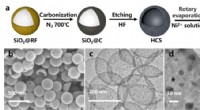
Nanoreactor Void-Confinement: Advancing Heterogeneous Catalysis Performance
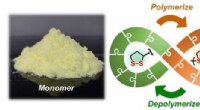
Nature-Derived Molecule Enables Fully Recyclable Polymers
New Technique Lets Scientists Recover Lead from Filters, Enhancing Tap Water Safety
New Study Questions Reliability of Mobile Drug Testing Devices
Turning Ocean Plastic Waste into Valuable Fuel: A Sustainable Clean-Up Solution
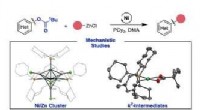
Catalytic Couplings Unveiled: Why Simple Synergies Aren’t Always the Answer
Columbia Researchers Pioneer Materials to Significantly Boost Solar Energy Harvesting
|
Geology
|
Math
|
Solar Eclipse
Science Discoveries © www.scienceaq.com