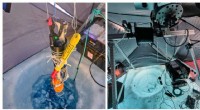
1. Titration: This is a quantitative method where a solution of known concentration (titrant) is added to a solution of unknown concentration (analyte) until the reaction is complete. This allows for the determination of the unknown concentration.
2. Spectroscopy: This encompasses a wide range of techniques that use electromagnetic radiation to analyze substances. Different types of spectroscopy include UV-Vis spectroscopy (measuring absorption of ultraviolet and visible light), IR spectroscopy (measuring absorption of infrared light), and NMR spectroscopy (measuring the interaction of nuclear spins with radio waves). Each method provides information about the structure, composition, and functional groups present in the substance.
3. Chromatography: This is a separation technique where components of a mixture are separated based on their different affinities for a stationary phase and a mobile phase. Common types include gas chromatography (GC) for separating volatile compounds and high-performance liquid chromatography (HPLC) for separating non-volatile compounds.
4. Mass Spectrometry: This technique measures the mass-to-charge ratio of ions. It is highly useful for identifying unknown compounds, determining their molecular weight, and analyzing isotopic composition.
5. Elemental Analysis: This involves determining the elemental composition of a sample. Common methods include combustion analysis (determining carbon, hydrogen, and nitrogen content) and inductively coupled plasma atomic emission spectrometry (ICP-AES) for determining the concentration of metals.
These are just a few of the many analytical techniques used in chemistry. The choice of method depends on the specific question being asked and the nature of the sample being analyzed.