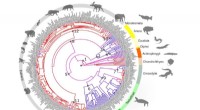
Humans are part of the primate family, specifically the hominid lineage. We share a common ancestor with chimpanzees and bonobos, who are our closest living relatives. This ancestor lived around 6-8 million years ago.
Hominin evolution has been a long and complex process. Many different species of hominins have existed over the past 6 million years, some going extinct, some leading to modern humans. This process is characterized by:
* Bipedalism: Walking upright on two legs developed early on, freeing up hands for other tasks.
* Brain size increase: Over time, hominin brains grew significantly, leading to increased cognitive abilities.
* Tool use and technology: Hominins developed complex tools and technologies, which helped them adapt to different environments and exploit new resources.
* Social and cultural complexity: Hominins evolved increasingly complex social structures and cultural practices.
The evolution of Homo sapiens, our species, occurred in Africa around 300,000 years ago. We are the only surviving hominin species, and our evolution is marked by:
* Increased reliance on complex language and communication.
* Sophisticated tool making and use.
* The development of art, music, and symbolic thought.
* Migration out of Africa and colonization of the globe.
We continue to learn more about human evolution through ongoing research. This research uses a variety of tools and techniques, including:
* Fossil evidence: Finding and analyzing fossils provides direct evidence of past hominin species and their anatomy.
* Genetic analysis: Comparing DNA from different hominin species and modern humans can help us understand evolutionary relationships and identify traits that have changed over time.
* Archaeological evidence: Studying tools, artifacts, and other evidence from past hominin cultures can provide insights into their behavior and way of life.
It's crucial to remember that human evolution is not a linear progression. Different hominin species co-existed and interacted, and our understanding of their relationships is constantly being revised. There is also ongoing debate about specific evolutionary pathways and the role of different factors, such as climate change or competition with other species.
Therefore, while our understanding of human evolution has come a long way, it remains a dynamic field with much more to discover.