By Patricia K. Maggio
Updated Aug 30, 2022
The Arecibo Observatory, the world’s largest radio telescope until its collapse, has been a cornerstone of modern astronomy since its first observations in 1960. Operated by Cornell University, Arecibo and other radio facilities have opened windows onto the universe that optical telescopes cannot see, revealing phenomena from planetary rotation to exotic stellar remnants.
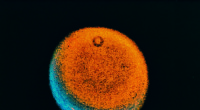
In 1964, Gordon Pettengill used Arecibo’s radar to determine that Mercury completes one rotation every 58.6 Earth days, not the previously assumed 88-day period. This 3:2 spin–orbit resonance—three rotations for every two orbits around the Sun—redefined our understanding of the planet’s interior and thermal history.
When Arecibo intercepted the 4769 Castalia asteroid in 1989, scientists Scott Hudson and Steven Ostro produced the first radar‑derived 3‑D model of an asteroid, revealing its peanut‑shaped silhouette. This breakthrough demonstrated radar’s power to map small bodies and assess potential Earth‑impact risks.
Discovered in 1974, the first binary pulsar PSR B1913+16 confirmed Einstein’s predictions of gravitational wave emission. In 1993, Russell Hulse and Joseph Taylor received the Nobel Prize in Physics for this work, marking a milestone in testing the limits of gravity.
The 1983 discovery of PSR B1937+21 by Backer, Goss, Davis, Heiles, and Kulkarni revealed a neutron star spinning 641 times per second. Millisecond pulsars serve as precise cosmic clocks, aiding navigation, tests of relativity, and the hunt for gravitational waves.
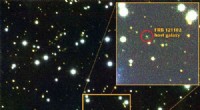
In 2008, Arecibo detected methanimine and hydrogen cyanide in Arp 220, a starburst galaxy 250 million light‑years away. The presence of these organic molecules bolsters the hypothesis that the ingredients for life may be common throughout the cosmos.