Gravity is the force of attraction between any two objects with mass. The Sun has a massive amount of mass, which creates a strong gravitational pull on Earth. This pull constantly tries to draw Earth towards the Sun.
Inertia is the tendency of an object to resist changes in its motion. Earth is constantly moving forward, in a straight line due to its inertia.
Here's how these forces work together:
1. Earth's initial forward motion: Imagine Earth was initially launched into space, moving in a straight line.
2. Gravity's pull: The Sun's gravity pulls Earth towards it, constantly trying to change Earth's path from a straight line.
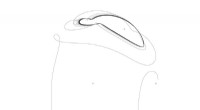
3. Curved path: Instead of falling straight into the Sun, Earth's forward motion and the Sun's gravity combine to create a curved path. This curved path is an orbit.
4. Balance: The Earth's forward motion and the Sun's gravity are perfectly balanced. This balance keeps Earth in orbit, preventing it from falling into the Sun or flying off into space.
Think of it like this: Imagine you're swinging a ball on a string. The string represents gravity, pulling the ball towards your hand (the Sun). The ball's inertia keeps it moving in a circle. If you let go of the string (remove gravity), the ball would fly off in a straight line.
This perfect balance between gravity and inertia is what keeps Earth, and all the other planets, in orbit around the Sun.