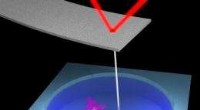
The researchers used the hammer to study how neurons respond to mechanical forces. They found that when a force is applied to a neuron, the cell's membrane stretches and the cell's cytoskeleton, which is a network of filaments that supports the cell's shape, stiffens. This stiffening helps the neuron to resist the force and maintain its shape.
The researchers say that their findings could help to explain how brain cells are damaged in traumatic brain injuries, such as those that occur during a concussion. They also believe that the hammer could be used to develop new treatments for brain injuries and other neurological disorders.
"This is a really exciting new tool that we can use to study how brain cells respond to mechanical forces," said study lead author Dr. Nicholas X. Fang. "We believe that this research could lead to new treatments for brain injuries and other neurological disorders."
The study was published in the journal Nature Nanotechnology.