Here are some key points highlighting the advantages and potential of novel high refractive index polymers in sustainable optoelectronics:
High Refractive Index: One of the main advantages of these polymers is their ability to achieve high refractive indices, which is crucial for efficient light manipulation and confinement in optoelectronic devices.
Organic Nature: Unlike traditional inorganic materials used in optoelectronics, many of these novel polymers are organic or hybrid organic-inorganic materials. This allows for greater flexibility in molecular design and synthesis.
Solution Processability: Many high refractive index polymers can be processed from solution, enabling low-cost and scalable fabrication techniques such as spin coating and printing. Solution processing is more environmentally friendly compared to conventional methods that involve high-temperature processing and vacuum conditions.
Low Optical Loss: Novel high refractive index polymers often exhibit low optical losses, ensuring efficient light transmission and minimal signal degradation in optoelectronic devices.
Tunable Properties: The molecular structure of these polymers can be tailored to achieve specific optical properties, such as refractive index, birefringence, and nonlinear optical response, making them versatile for different applications.
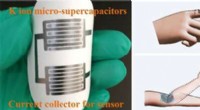
Lightweight and Flexible: Organic polymers are lightweight and flexible, enabling the fabrication of lightweight and flexible optoelectronic devices. This flexibility broadens the range of potential applications, including wearable devices and conformable optics.
Environmental Sustainability: Many novel high refractive index polymers are based on renewable or biodegradable materials, making them more environmentally friendly compared to traditional materials. Additionally, solution-based processing techniques generate less waste and reduce energy consumption during manufacturing.
Biocompatibility: Some high refractive index polymers exhibit biocompatibility, making them suitable for biomedical applications such as optical sensing and imaging in the biomedical field.
The development and application of novel high refractive index polymers hold great promise for advancing sustainable optoelectronics. They offer opportunities for improved device performance, reduced environmental impact, and the exploration of new applications in various fields, including telecommunications, sensing, imaging, and renewable energy.