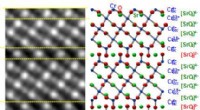
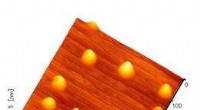
One way to create a solid superfluid is to use layered 2D materials. These materials are made up of sheets of atoms that are stacked on top of each other. The atoms in each sheet are strongly bonded to each other, but the sheets themselves are weakly bonded. This allows the sheets to slide past each other easily, which is essential for superfluidity.
In a recent study, researchers at the University of California, Berkeley, created a solid superfluid from layered 2D materials. They used a technique called molecular beam epitaxy to grow thin films of the materials, and then they used a laser to heat the films to a temperature just below the melting point. This caused the sheets of atoms to start to slide past each other, creating a superfluid state.
The researchers believe that solid superfluids could have a wide range of applications, such as in energy-efficient electronics and transportation. They are also studying how to use solid superfluids to create new materials with unique properties.
The discovery of solid superfluids opens up new possibilities for the study of matter and its properties. It also has the potential to revolutionize a wide range of technologies.