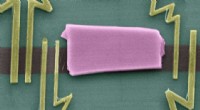
Quantum squeezing is a fundamental property of quantum mechanics and has been demonstrated in a variety of experiments. One of the most common methods of achieving quantum squeezing is to use a parametric amplifier, which is a type of nonlinear optical device. Parametric amplifiers work by converting energy from one mode of an electromagnetic field to another mode, while preserving the total number of photons. By carefully choosing the parameters of the parametric amplifier, it is possible to achieve squeezing in one of the modes.
Quantum squeezing has been used in a variety of applications, including quantum metrology, quantum imaging, and quantum computing. In quantum metrology, squeezing can be used to improve the sensitivity of measurements. In quantum imaging, squeezing can be used to improve the resolution of images. In quantum computing, squeezing can be used to reduce the number of operations required to perform certain tasks.
Quantum squeezing is a powerful tool that has the potential to revolutionize a wide range of fields. As our understanding of quantum mechanics continues to improve, we can expect to see even more applications for quantum squeezing in the future.