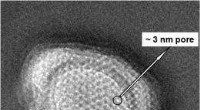
The team, led by researchers from the University of California, Berkeley, has unveiled the secrets behind the spontaneous formation of these pie-like structures, which consist of five triangular domains radiating outward from a central point. Their study, published in the journal Nature Nanotechnology, sheds light on the interplay of molecular interactions and geometry that drive this unique self-assembly behavior.
The key players in this assembly process are small organic molecules known as phthalocyanines, specifically copper phthalocyanines (CuPc). When these molecules are dissolved in a solvent and then deposited onto a substrate, they undergo a remarkable transformation, self-organizing into highly ordered "pentagonal quasicrystals."
What makes these structures so fascinating is their resemblance to quasicrystals, a class of materials that possess long-range order without translational symmetry. In other words, the molecules within these structures are arranged in a repeating pattern, but not in a regular periodic fashion like traditional crystals.
To understand the driving forces behind this unique self-assembly, the researchers employed a combination of experimental techniques and theoretical modeling. Their findings suggest that the molecular interactions responsible for this behavior involve a delicate balance of attractive and repulsive forces between the CuPc molecules.
Specifically, the phthalocyanines' rigid molecular structure and their tendency to form hydrogen bonds with neighboring molecules contribute to the formation of these highly organized patterns. The balance of these interactions results in the emergence of five distinct domains, resembling slices of pie.
The team also discovered that the size of the pentagonal quasicrystals can be precisely controlled by adjusting the concentration of the CuPc molecules in the solution. This tunability opens up exciting possibilities for the fabrication of functional nanomaterials and devices with tailored properties.
The spontaneous self-assembly of CuPc molecules into pentagonal quasicrystals provides a remarkable example of how intricate molecular interactions can give rise to complex and beautiful nanoscale structures. The findings of this study not only expand our understanding of fundamental self-assembly processes but also pave the way for the design and engineering of novel materials with potential applications in electronics, optics, and other technological areas.