Phosphorus is a chemical element with the symbol P and atomic number 15. A nonmetal of the nitrogen group, phosphorus is commonly found in inorganic phosphate rocks and in biological molecules such as DNA and RNA. In its elemental form, phosphorus is a waxy, white solid that is highly reactive and can easily catch fire.
When phosphorus is heated to a high temperature, it undergoes a phase transition and transforms into a blue, metallic form. This blue phosphorus is a semiconductor, meaning that it has electrical properties that are intermediate between those of a conductor and an insulator. This makes it a promising material for use in electronic devices, such as transistors and solar cells.
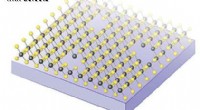
The transformation of phosphorus from a semiconductor to a metal is a complex process that involves several steps. First, the phosphorus atoms must be heated to a temperature of around 1,200 degrees Celsius. This causes the atoms to vibrate more vigorously, breaking the bonds that hold them together in the semiconductor lattice.
Once the bonds are broken, the phosphorus atoms are free to move around and collide with each other. This collision process causes the atoms to transfer electrons, which creates an electric current. This is what makes blue phosphorus a semiconductor.
As the temperature is increased further, the phosphorus atoms move faster and collide with each other more frequently. This causes more electrons to be transferred, which increases the electric current. Eventually, the current becomes so strong that the phosphorus atoms are completely ionized and the material becomes a metal.
The transformation of phosphorus from a semiconductor to a metal is a reversible process. If the blue phosphorus is cooled down, it will transform back into a semiconductor. This makes it a versatile material that can be used in a variety of applications, depending on the desired electrical properties.
Blue phosphorus is a promising material for use in electronic devices because it is a relatively inexpensive and abundant material. It is also a very efficient semiconductor, meaning that it can conduct electricity with very little loss of energy. This makes it a good choice for use in high-power electronic devices, such as solar cells and transistors.
In addition to its potential applications in electronics, blue phosphorus is also being investigated for use in other fields, such as medicine and catalysis. Researchers are exploring the possibility of using blue phosphorus to deliver drugs to specific parts of the body or to develop new catalysts for chemical reactions.
The unique properties of blue phosphorus make it a promising material for a variety of applications. As research into this material continues, we can expect to see even more innovative uses for blue phosphorus in the future.