When a liquid droplet is placed on a surface, it can either spread out or form a spherical cap, depending on the surface chemistry and the liquid's properties. If the surface is hydrophilic (water-loving), the droplet will spread out, while if the surface is hydrophobic (water-hating), the droplet will form a spherical cap.
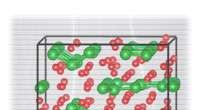
In the case of a liquid droplet on a surface with tiny particles, the droplet can grow around the particles, forming a "capillary bridge." The capillary bridge is formed because the particles act as nucleation sites for the liquid, and the liquid molecules are attracted to the particles and each other.
The researchers developed a theoretical model that describes how the capillary bridge grows over time. The model takes into account the surface tension of the liquid, the contact angle between the liquid and the surface, and the size of the particles.
The model predictions were compared to experimental measurements of capillary bridge growth, and the two were found to be in good agreement. This shows that the model is accurate and can be used to predict how capillary bridges will grow on a surface.
The researchers say that the model could be used to design surfaces that promote or inhibit the growth of capillary bridges. This could have applications in a variety of fields, such as:
* Self-cleaning surfaces: Capillary bridges can be used to transport liquid droplets across a surface, which could be used to create self-cleaning surfaces.
* Microfluidics: Capillary bridges can be used to control the flow of liquid in microfluidic devices, which are used in a variety of applications, such as drug delivery and lab-on-a-chip devices.
* Bioprinting: Capillary bridges can be used to deposit droplets of bioink on a surface, which could be used to create 3D structures for tissue engineering.
The researchers say that the model is a valuable tool for understanding how droplets grow around tiny particles on a surface. This knowledge could lead to new ways to control the growth and shape of droplets, which has applications in a variety of fields.