Gold nanoparticles are widely recognized for their remarkable properties, such as their high surface area-to-volume ratio and excellent electrical conductivity. Their unique features have attracted considerable interest in various fields, including sensing, catalysis, and biomedical applications.
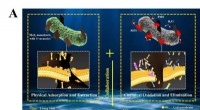
The study focused on the adsorption of organic molecules onto the surface of gold nanoparticles and its subsequent influence on their electrochemical behavior. The research team employed cyclic voltammetry, a widely used electrochemical technique, to investigate the changes in the nanoparticles' electrochemical properties.
Their findings revealed that the adsorption of organic molecules dramatically alters the electrochemical response of gold nanoparticles. Specifically, the presence of organic molecules shifted the reduction and oxidation peaks in the cyclic voltammograms, indicating changes in the nanoparticles' reactivity and selectivity.
The researchers also observed a correlation between the molecular structure and the extent of the observed effects. Different functional groups present in the organic molecules led to distinct variations in the nanoparticles' electrochemical behavior, highlighting the molecular structure's critical role in modulating the nanoparticles' properties.
The study underscores the importance of understanding the interactions between organic molecules and gold nanoparticles for designing and optimizing nanomaterial-based devices. By controlling the molecular structure of organic adsorbates, it becomes possible to tailor the electrochemical properties of gold nanoparticles, enabling the development of high-performance sensing platforms and electrocatalysts for various applications.
The research team's findings contribute to the growing field of nanomaterial engineering, where precise control over the properties of nanomaterials is crucial for achieving specific functionalities. Their work opens up new avenues for exploring the interplay between organic molecules and gold nanoparticles, thus paving the way for advancements in sensing technologies, catalysis, and related fields.