1. Linear Accelerators (Linacs):
* Basic Principle: Protons are accelerated in a straight line by a series of alternating electric fields.
* Process:
* Ion Source: Protons are created by stripping electrons from hydrogen atoms.
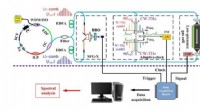
* Radio Frequency (RF) Cavities: These cavities are like hollow pipes with oscillating electric fields. The frequency of the RF field is synchronized with the proton's motion.
* Acceleration: As a proton passes through an RF cavity, it experiences an electric force that pushes it forward. This force is strongest when the proton enters the cavity at the right time (when the electric field is at its peak).
* Drift Tubes: To maintain acceleration, the protons are guided through "drift tubes" between the RF cavities. These tubes shield the protons from the electric field while they travel.
* Increasing Energy: The RF cavities are spaced further apart as the protons gain energy, ensuring they encounter the accelerating electric field at the optimal time.
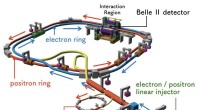
2. Circular Accelerators (Synchrotrons):
* Basic Principle: Protons are accelerated in a circular path by magnetic fields and radio frequency cavities.
* Process:
* Ion Source and Injection: Similar to linacs, protons are created and injected into the synchrotron.
* Magnetic Bending: Powerful magnets are arranged in a ring to guide the protons in a circular path.
* RF Cavities: RF cavities are strategically placed along the circular path, accelerating the protons each time they pass through.
* Synchronous Acceleration: The frequency of the RF cavities is synchronized with the proton's speed and the magnetic field strength. This ensures the protons receive a boost in energy each time they pass through.
* Increasing Energy: Both the magnetic field strength and the frequency of the RF cavities are increased gradually, pushing the protons to higher energies.
Key Concepts:
* Electromagnetic Forces: Acceleration in particle accelerators relies on the interaction of charged particles with electromagnetic fields.
* Synchronization: The timing of the electric and magnetic fields is crucial for efficient acceleration.
* Energy Levels: The energy of the protons is measured in units of electron volts (eV). Modern accelerators can achieve energies of trillions of electron volts (TeV).
Examples:
* Linacs: Used for pre-acceleration in larger accelerators and for medical applications like cancer treatment.
* Synchrotrons: The Large Hadron Collider (LHC) is the world's largest and most powerful synchrotron, used to collide protons at high energies.
Let me know if you'd like more detail on any aspect of this process!