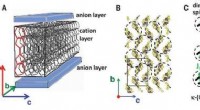
The material is called cuprate, and it was discovered in 1986. Cuprates are a class of ceramic materials that contain copper and oxygen atoms, and they are the highest temperature superconductors known to date.
Superconductors are materials that conduct electricity with no resistance, and this makes them very efficient. However, most superconductors only work at very low temperatures, which makes them difficult to use in practical applications. Cuprates, on the other hand, can superconduct at temperatures that are much closer to room temperature, making them more promising for real-world use.
Despite the potential of cuprates, scientists still don't fully understand how they work. This is because cuprates are very complex materials, and their behaviour is influenced by many different factors.
However, a new study by researchers at the University of Cambridge has shed some light on how cuprates work. The study, which was published in the journal Nature Physics, found that the key to understanding cuprates lies in the way that their electrons interact with each other.
The researchers found that the electrons in cuprates form pairs that are called Cooper pairs. These Cooper pairs are responsible for the superconductivity of cuprates. The researchers also found that the strength of the interaction between the electrons is affected by the temperature of the material.
This finding could lead to the development of new materials that are even better superconductors than cuprates. By understanding how the electrons in cuprates interact with each other, scientists can design materials that have stronger electron-electron interactions and that can therefore superconduct at higher temperatures.
The discovery of cuprates and the understanding of how they work could have a major impact on technology. Superconductors could be used to make more efficient electrical cables, more powerful computers, and more sensitive medical imaging devices.