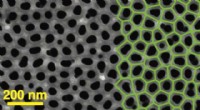
Active foams are materials that are made up of bubbles that are constantly moving and changing shape. They are found in a variety of natural and man-made systems, including soap bubbles, foams in food, and the lungs of mammals.
The behavior of active foams is determined by the interactions between the filaments that make up the bubbles. These interactions can be complex, and they can lead to a variety of different foam structures.
The new model developed by the UCSB physicists provides a simple way to understand the interactions between filaments and how they lead to the formation of active foams. The model is based on the idea that filaments are like springs that are constantly trying to contract. When two filaments come into contact, they will push against each other and try to push each other away. This interaction can lead to the formation of bubbles.
The model can be used to predict the structure of active foams under a variety of conditions. The physicists found that the structure of the foam depends on the concentration of filaments and the strength of the interactions between them.
The new model could help to understand the behavior of a variety of materials that are made up of filaments, including biological membranes and synthetic foams. The model could also be used to design new materials with specific properties.
"Our model provides a new way to understand the behavior of active foams," said UCSB physicist Paul Chaikin. "We believe that this model could be a useful tool for understanding the behavior of a variety of materials that are made up of filaments."