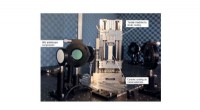
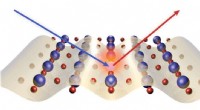
The scientific method begins with observation. This means using your senses to gather information about the world around you. For example, you might notice that plants grow taller when they are given more sunlight.
2. Hypothesis
Once you have made an observation, you can develop a hypothesis. A hypothesis is a possible explanation for your observation. For example, you might hypothesize that plants grow taller when they are given more sunlight because sunlight helps them to produce food.
3. Experiment
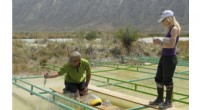
The next step is to conduct an experiment to test your hypothesis. An experiment is a controlled test that you can use to gather data to support or refute your hypothesis. For example, you could conduct an experiment by growing two groups of plants, one group in sunlight and the other group in darkness. If your hypothesis is correct, the plants in the sunlight group will grow taller than the plants in the darkness group.
4. Analysis
Once you have conducted your experiment, you need to analyze your data. This means looking at your data and trying to find patterns or trends. For example, you might find that the plants in the sunlight group grew an average of 10 centimeters taller than the plants in the darkness group.
5. Conclusion
Finally, you need to draw a conclusion based on your data. A conclusion is a statement that summarizes what you have learned from your experiment. For example, you might conclude that sunlight is necessary for plant growth.
6. Share your results
The final step of the scientific method is to share your results with others. This is important because it allows other scientists to review your work and build upon your findings. You can share your results by writing a paper, giving a presentation, or posting your findings online.