1. Erosion:
* Loss of canopy cover: Rainforests have dense canopies that intercept rainfall, slowing it down and allowing it to gradually infiltrate the soil. When trees are removed, heavy rainfall hits the exposed soil directly.
* Loss of roots: Rainforest tree roots bind the soil together, preventing erosion. Without them, topsoil is easily washed away by rain.
* Reduced organic matter: Rainforest soils are rich in organic matter, which helps improve soil structure and water retention. Deforestation depletes this organic matter, leaving the soil loose and vulnerable.
2. Nutrient Depletion:
* Loss of nutrient cycling: Rainforests have complex cycles of nutrient exchange between plants, soil, and decomposers. Deforestation disrupts these cycles, leading to the loss of essential nutrients like nitrogen and phosphorus.
* Increased leaching: Without the canopy to filter rainwater, nutrients are quickly washed away from the soil, further depleting its fertility.
* Loss of biodiversity: Rainforests are home to a vast array of microorganisms and insects that play crucial roles in nutrient cycling. Deforestation reduces biodiversity, disrupting these vital processes.
3. Compaction:
* Heavy machinery: Logging and clearing operations often use heavy machinery that compacts the soil, reducing its ability to absorb water and air.
* Reduced infiltration: Compacted soil prevents rainwater from penetrating deep into the ground, increasing runoff and erosion.
4. Soil Acidification:
* Decomposition of organic matter: When organic matter decomposes in the absence of living vegetation, it releases acidic compounds that can acidify the soil.
* Loss of buffering capacity: The loss of organic matter reduces the soil's ability to buffer against changes in pH, making it more susceptible to acidification.
5. Soil Degradation and Loss of Productivity:
* Infertile soil: The combination of erosion, nutrient depletion, and compaction makes the soil infertile, unsuitable for agriculture or other land uses.
* Desertification: In extreme cases, deforestation can lead to desertification, where the soil is completely degraded and unable to support plant life.
Consequences for the Environment:
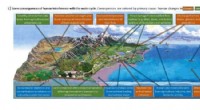
* Water contamination: Eroded soil carries pollutants and fertilizers into rivers and streams, contaminating water sources.
* Flooding: Deforestation increases runoff and reduces water infiltration, leading to flooding events.
* Climate change: Soil degradation contributes to climate change by reducing carbon sequestration and increasing greenhouse gas emissions.
Overall, the impact of deforestation on soil is a major environmental concern, leading to a cascade of negative effects that can have far-reaching consequences for ecosystems, human populations, and the planet as a whole.