Here are some ways in which vegetation influences runoff:
1. Rainfall Interception: Plants intercept rainfall through their leaves and branches, reducing the amount of water reaching the ground. The intercepted water either evaporates or drips down slowly, mitigating runoff.
2. Infiltration and Absorption: The root systems of vegetation create channels and cracks in the soil, enhancing its ability to absorb and infiltrate water. As a result, less water accumulates on the surface, leading to reduced runoff.
3. Evapotranspiration: Plants release water vapor through transpiration and evaporation. This process reduces the amount of water available for runoff and helps regulate the water balance in the ecosystem.
4. Soil Structure Improvement: Vegetation improves soil structure by binding soil particles together with their roots, reducing soil erosion and increasing its porosity. Improved soil structure facilitates water infiltration and reduces surface runoff.
5. Terracing and Slopes: In sloping areas, vegetation acts as natural terraces, slowing down the flow of water and allowing it to infiltrate into the soil. This reduces the speed and volume of runoff, preventing soil erosion.
6. Litter and Mulch: The layer of leaf litter and organic matter on the ground under vegetation acts as a natural mulch. It absorbs and holds water, reducing runoff and promoting soil moisture retention.
7. Flow Resistance: Dense vegetation can physically obstruct the flow of water, causing runoff to slow down and spread out. This allows more time for water to infiltrate and reduces the erosive power of runoff.
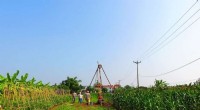
The extent to which vegetation affects runoff depends on various factors such as the type and density of vegetation, rainfall intensity, soil characteristics, and topography. In general, areas with dense vegetation experience less runoff compared to bare or sparsely vegetated areas.