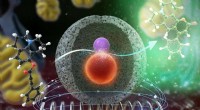
1. Cellular Organization: Living things are made up of cells, while non-living things are not.
2. Metabolism: Living things need energy to survive and grow. They absorb nutrients, convert them into energy, and release waste products. Non-living things do not require energy to exist.
3. Growth and Development: Living things grow and develop throughout their lifespan. They undergo changes in size, structure, and complexity. Non-living things remain the same in size and structure.
4. Reproduction: Living things have the ability to reproduce and create new individuals of the same species. Non-living things do not reproduce.
5. Response to Stimuli: Living things can detect changes in the environment and respond to those changes. For example, plants may respond to sunlight by growing towards it. Non-living things do not respond to stimuli.
6. Adaptation and Evolution: Living things can adapt to changes in their environment through genetic mutations and natural selection. These changes allow them to survive and reproduce in different conditions. Non-living things do not evolve or adapt.
7. Organization: Living things are organized into a hierarchical structure, with different levels of complexity, from cells to tissues, organs, systems, and organisms. Non-living things are not organized in the same way.
These criteria are not always absolute, as some non-living things may display certain characteristics that are typically associated with living things, such as movement (like water currents or tornadoes) or a response to stimuli (like a wind vane). However, in general, these criteria help us to distinguish living organisms from non-living entities.