To better understand how much water is stored in snow, researchers from the University of California, Davis, and the University of Colorado Boulder, have developed a new model that uses satellite data and weather station measurements to estimate the amount of water stored in the snowpack in the western United States.
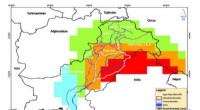
The model, called the Snow Water Equivalent (SWE) product, combines data from the Moderate Resolution Imaging Spectroradiometer (MODIS) on NASA's Aqua satellite with measurements from weather stations to produce a map of SWE across the western United States. SWE is a measure of the amount of water that would be produced if all the snow in a given area were melted.
The SWE product provides researchers and water managers with a better understanding of how much water is stored in the snowpack, which is essential for managing water resources and predicting floods and droughts.
"The SWE product is a valuable tool for water managers and researchers in the western United States," said Alan Hamlet, a professor of civil and environmental engineering at UC Davis and co-author of the study. "It provides a comprehensive and accurate estimate of the amount of water stored in the snowpack, which is critical information for managing water resources and predicting floods and droughts."
The SWE product is available online at the National Snow and Ice Data Center (NSIDC).