By Bryan Grubbs | Updated Aug 30, 2022
Ultima_Gaina/iStock/GettyImages
In mathematics, the study of triangles is called trigonometry. By applying the core trigonometric functions—sine, cosine, and tangent—you can uncover unknown angles and side lengths. The unknown angle is commonly denoted as θ (theta). This guide explains how to calculate θ using right‑triangle shortcuts, the Law of Sines, and the Law of Cosines.
When a triangle contains a 90° angle, it is a right‑triangle. For these triangles, the well‑known mnemonic SOH‑CAH‑TOA helps you relate sides to angles:
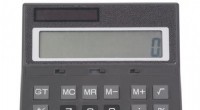
To solve for θ, use the inverse trigonometric functions on a graphing calculator: arcsin (SIN−1), arccos (COS−1), and arctan (TAN−1). Input the side ratio in fractional form and ensure the calculator is in DEGREE mode.
Example: If the side opposite θ is 4 and the hypotenuse is 5, enter SIN−1(4/5). The result is approximately 53.13°.
For triangles that do not contain a right angle, the Law of Sines is your tool of choice when you know one angle and its opposite side. The relationship is:
sin A / a = sin B / b = sin C / c
To find an unknown angle, isolate its sine by multiplying both sides by the opposite side’s length. Then use the arcsine function.
Example: With side a = 5, side b = 7, and angle A = 45°, compute SIN−1((7 × SIN(45°))/5). The result is about 81.87°.
The Law of Cosines applies to any triangle and is especially useful when all three sides are known. The formula is:
c² = a² + b² – 2ab cos(C) → cos(C) = (a² + b² – c²) / (2ab)
Example: For sides 5, 7, and 10, enter COS−1((5² + 7² – 10²) / (2 × 5 × 7)). The calculator yields approximately 111.80°.
Remember that all triangles sum to 180°. By repeatedly applying these techniques to a variety of triangles, you’ll gain confidence and intuition for solving for θ. Mastery comes from practice and experimentation—each problem is a chance to refine your skill set.