Goodshoot/Goodshoot/Getty Images
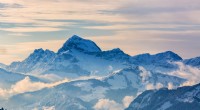
Rifts mark the places where the Earth's crust is pulling apart. The Great Rift Valley is the largest of these systems, extending thousands of miles from Mozambique in southeastern Africa to the Middle East. Along this dramatic stretch lie iconic peaks such as Mount Kenya and Mount Kilimanjaro, and the valley is a hotbed of ongoing geological activity.
Historically, “Great Rift Valley” was a blanket term for a chain of rifts that ran from East Africa to the Levant. Modern geology treats them as a network of interconnected basins rather than a single system. Key components include:
The East African Rift itself splits into several branches. The Gregory Rift runs from the Red Sea and Gulf of Aden through Ethiopia, Kenya, and Tanzania, while the Western or Albertine Rift arcs from Uganda into Malawi and hosts many large lakes.
Geologists estimate that the rift began to form about 25 million years ago, when Africa and the Arabian Peninsula were still joined. As the plates pulled apart, the space between them filled with seawater, creating what is now the Red Sea. The rift remains active: the Red Sea continues to widen, and the African plate is still fragmenting within the East African Rift. The Nubian plate, which covers most of Africa, is separating from the Somali plate that carries the Horn of Africa. Some researchers predict that, if the trend continues, the Gulf of Aden could flood the widening basin, turning the Horn into a large island in the far future.
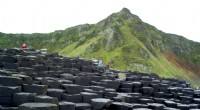
Rift valleys are most commonly found beneath the ocean, but the East African Rift is one of the few that surface on land. Here, tectonic plates are beginning to split apart—a process known as rifting—creating a divergent plate boundary. As the crust thins and sinks, magma rises to fill the void, generating new crustal material. Over geological time, repeated rifting can give rise to entirely new continental fragments.
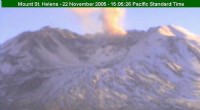
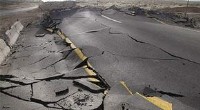
The same magma that forms the valley’s new crust often feeds volcanoes, so the Great Rift Valley hosts many active and dormant volcanoes, including Mount Kenya and Mount Kilimanjaro. Not all magma reaches the surface explosively; some simply oozes through fissures, creating hot springs and geysers. Earthquakes are common along the numerous faults that define the rift, making the region a focus of seismic research.