Ianm35/Getty Images
For most of our schooling, the map of Earth features seven continents. Yet a growing body of geological research suggests that a hidden, almost entirely submerged landmass—Zealandia—deserves recognition as the eighth continent. Remarkably, it is also the youngest continental fragment on our planet.
During the breakup of Pangaea 280–230 million years ago, the northern supercontinent Laurasia and the southern Gondwana emerged. A further split of Gondwana about 100 million years later separated South America and Africa, creating the Atlantic Ocean. Subsequent tectonic forces split Australia from Antarctica, and an even more unique event formed Zealandia roughly 80 million years ago.
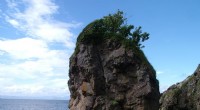
Covering 1.9 million square miles, Zealandia is Earth's smallest continent, but 94 % of it now lies beneath the South Pacific. Only its highest peaks break the surface, forming the islands of New Zealand and New Caledonia. The question remains: what happened to this once‑landlocked continent, and does it still qualify as a continent?
Dean Mouhtaropoulos/Getty Images
Scientists were only beginning to explore Zealandia’s history when its existence was first seriously proposed. In 1895, Sir James Hector, a Scottish naturalist, hypothesized a submerged “Terra Australis” based on his surveys around New Zealand. He correctly identified the continent’s remnants as the towering ranges of New Zealand, but his idea was largely dismissed until the 21st century.
In 2017, a team led by geologist Nick Mortimer of GNS Science used rock samples and satellite data to confirm Zealandia’s continental status, publishing their findings in the Geological Society of America. The continent was also named Te Riu‑a‑Māui, honoring the Māori term for “the island of the gods.” A comprehensive map was completed in 2023, illustrating Zealandia’s full footprint beneath the ocean floor.
zelvan/Shutterstock
Zealandia’s formation differed markedly from other continents. Volcanic activity around the present‑day Tasman Sea created a chain of volcanoes that split the landmass from Australia and Antarctica. Tectonic forces then tugged the two ends of Zealandia in opposite directions, thinning its continental crust far more than that of the main continents.
Seismic studies of seafloor cores reveal that Zealandia’s final submersion coincided with the rise of the Ring of Fire—a 50–35 million‑year‑old volcanic belt encircling the Pacific. The violent tectonic forces associated with this belt caused Zealandia’s thin crust to buckle and sink, leaving the majority of the continent below sea level.
Although most of Zealandia is now underwater, the presence of a distinct continental crust—comprised of igneous, metamorphic, and sedimentary rocks—demonstrates that it remains a continental entity. The debate over whether to classify it as a full continent or a microcontinent continues, but its geological significance is undeniable.
Ianm35/Getty Images
Defining a continent can be complex, and educational systems vary worldwide. While most American curricula list seven continents, other regions combine the Americas or merge Europe and Asia, reducing the count to six or five. This ambiguity places Zealandia in a gray zone, potentially counted as the fifth, sixth, seventh, or eighth continent.
Despite its submersion, Zealandia is clearly elevated relative to the surrounding oceanic crust and exhibits a diverse lithology unlike the igneous‑dominated seafloor. Some geologists argue for a microcontinent classification, citing examples like Madagascar. However, the scientific consensus, based on Zealandia’s area and crustal characteristics, supports its status as a true continent.
With no governing body to officially recognize continents, Zealandia’s classification may remain debated. Nonetheless, its discovery reshapes our understanding of Earth's geological history and highlights the dynamic nature of our planet’s surface.