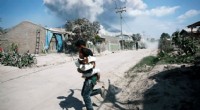
Volcanoes: The most prominent feature formed along subduction zones is volcanoes. As the subducting plate sinks, it releases water and other volatiles into the mantle. This lowers the melting point of the surrounding rock, leading to the formation of magma. This magma rises to the surface, creating volcanoes that are often explosive and produce andesitic or rhyolitic lavas. The "Ring of Fire" around the Pacific Ocean is a prime example of a region dominated by volcanoes formed along subduction zones.
Trenches: The point where the two plates meet is marked by a deep ocean trench, the deepest parts of the ocean. The trench is formed by the downward bending of the subducting plate.
Island Arcs: Where the subducting plate meets the overriding plate, a chain of volcanic islands can form, known as an island arc. These islands are formed from the rising magma created by the subduction process. The Aleutian Islands, the Mariana Islands, and the Japanese Islands are examples of island arcs.
Earthquakes: Subduction zones are the sites of some of the world's most powerful earthquakes. These earthquakes are caused by the friction between the two plates as they grind past each other.
Mountain Ranges: Subduction zones can also lead to the formation of mountain ranges. The collision of the two plates can cause the overriding plate to buckle and fold, creating mountain chains like the Andes Mountains.
Metamorphism: The intense heat and pressure associated with subduction zones can cause the rocks of both the overriding and subducting plates to undergo metamorphism, transforming their mineral composition and texture.
Other Features: Subduction zones also create features like:
* Accretionary prisms: These are wedges of sediment and rock scraped off the subducting plate and piled up at the edge of the overriding plate.
* Back-arc basins: These are basins of relatively thin crust that form behind island arcs.
In summary, subduction zones are dynamic and complex regions that play a crucial role in shaping the Earth's surface, leading to the formation of volcanoes, trenches, island arcs, mountains, earthquakes, and various other geological features.