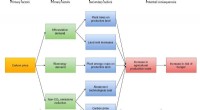
Reasons:
* Surface Area: Fine-grained rocks have a larger surface area exposed to weathering agents. The smaller mineral grains provide more points of contact for water, air, and other weathering elements.
* Mineral Composition: Fine-grained rocks often have a higher proportion of minerals that are susceptible to weathering, such as feldspar and pyroxene. These minerals are more easily broken down by chemical weathering processes.
* Porosity and Permeability: Fine-grained rocks tend to be more porous and permeable, allowing for greater penetration of water and other weathering agents. This enhances chemical and physical weathering processes.
* Fractures and Joints: Fine-grained rocks may have a higher density of fractures and joints, which provide pathways for weathering agents to penetrate and weaken the rock.
Example:
* Basalt: A fine-grained igneous rock that weathers relatively quickly due to its high surface area and mineral composition.
* Granite: A coarse-grained igneous rock that is more resistant to weathering due to its larger mineral grains and lower surface area.
Conclusion:
The finer the grain size of an igneous rock, the greater its susceptibility to weathering. This is due to the increased surface area, mineral composition, porosity, and potential for fractures and joints that facilitate weathering processes.