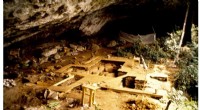
Canyons:
* What they are: Deep, narrow valleys with steep sides, often carved by rivers over millions of years.
* How they form: Rivers flowing through rock layers slowly erode the land, carving out a deep gorge. The river's power, combined with weathering and erosion, creates the characteristic steep cliffs.
* Examples: The Grand Canyon in Arizona, USA, the Yarlung Tsangpo Grand Canyon in Tibet, China.
Mesas:
* What they are: Flat-topped hills or mountains with steep sides, often formed by erosion.
* How they form: When layers of hard, resistant rock are laid down on top of softer rock, the softer rock erodes faster, leaving the harder rock as a plateau. Over time, erosion around the edges creates the mesa's steep cliffs.
* Examples: Mesa Verde National Park in Colorado, USA, the Grand Staircase-Escalante National Monument in Utah, USA.
Relationship between Canyons and Mesas:
* Canyons often carve through mesas: The same erosive forces that form canyons can also carve through mesas, creating dramatic landscapes.
* Mesas can be found within canyons: Mesas can form within canyons as the river continues to erode, leaving behind flat-topped plateaus.
Key Differences:
* Depth: Canyons are deep, while mesas are relatively flat-topped.
* Shape: Canyons are long and narrow, while mesas are more rounded or square-shaped.
* Formation: Canyons are formed by rivers carving through rock, while mesas are formed by differential erosion of rock layers.
Overall:
Canyons and mesas are fascinating geological formations that showcase the power of erosion over time. They are a testament to the earth's dynamic processes and offer stunning examples of natural beauty.