1. Subduction and Volcanoes:
* Subduction: The denser plate (usually the older one) is forced beneath the less dense plate. This process is called subduction.
* Volcanic Arcs: As the subducted plate descends, it melts due to the heat and pressure. This molten rock rises to the surface, creating volcanoes. These volcanoes often form curved chains called volcanic arcs, located parallel to the trench.
* Examples: The Aleutian Islands in Alaska, the Mariana Islands in the Pacific Ocean, and the Japanese Islands.
2. Trench Formation:
* Deepest Parts of the Ocean: The zone where the plates converge is marked by a deep, narrow depression called a trench. This is the deepest part of the ocean floor.
* Examples: The Mariana Trench, the Peru-Chile Trench, and the Tonga Trench.
3. Earthquakes:
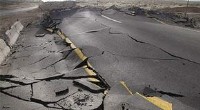
* Frequent and Powerful: Oceanic convergent boundaries are characterized by frequent and powerful earthquakes. These occur as the plates grind against each other or when the subducting plate suddenly slips.
* Examples: The 2011 Tohoku earthquake in Japan, the 1960 Valdivia earthquake in Chile, and the 2004 Indian Ocean earthquake.
4. Island Arcs:
* Volcanic Islands: As volcanic arcs rise above sea level, they form chains of islands known as island arcs.
* Examples: The Aleutian Islands, the Mariana Islands, and the Lesser Antilles.
5. Accretionary Wedges:
* Sediment Accumulation: As the subducting plate descends, sediments and other debris are scraped off the top of the plate. These materials accumulate at the edge of the overriding plate, forming an accretionary wedge.
* Growth of Continents: These wedges contribute to the growth of continents over time.
6. Ophiolite Complexes:
* Oceanic Crust Exhumed: In rare cases, pieces of the subducting oceanic crust can be scraped off and exposed at the surface, forming ophiolite complexes. These complexes provide valuable insights into the composition and formation of oceanic crust.
7. Oceanic Plate Recycling:
* Plate Renewal: Subduction zones are responsible for recycling oceanic plates back into the Earth's mantle. This process ensures the ongoing renewal of Earth's crust.
Overall, oceanic convergent boundaries are areas of intense geological activity, shaping the Earth's surface and driving significant processes within the planet. They are responsible for some of the most dramatic landscapes on Earth, including towering volcanoes, deep trenches, and island chains.