By Chris Deziel | Updated Aug 30, 2022
Lowering water’s freezing point is a common kitchen trick—just add salt, sugar, or any other solute. Raising the freezing temperature, however, is far less straightforward, and for a long time many scientists wondered whether it was even possible. Recent research has shown that, under specific conditions, the freezing point of pure, supercooled water can indeed be elevated using a handful of unconventional techniques.
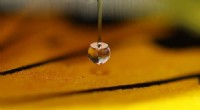
Water is a polar molecule that readily forms hydrogen bonds. When a droplet of pure water is suspended in still air and kept from touching any surface, it can remain liquid well below 0 °C—down to roughly –40 °C in laboratory settings. Adding alcohol changes this behavior dramatically. Upon cooling, alcohol molecules arrange into ice‑like hexagons that serve as nucleation sites. The water droplets coalesce around these structures, effectively raising the freezing point of the mixture to 0 °C, even though the water itself was supercooled.
Israeli researchers explored a different avenue by generating charged cells with pyroelectric crystals housed in copper cylinders. In a humid room, they cooled the environment until water condensed on the crystals. On an uncharged surface, droplets froze at –12.5 °C, but when the surface carried a positive charge they froze at –7 °C; with a negative charge the freezing point dropped to –18 °C. Even more intriguing, droplets on a negatively charged surface stayed liquid at –11 °C for ten minutes. When the charge dissipated, raising the room temperature to –8 °C induced rapid freezing, a result the team attributes to the re‑establishment of a positive charge on the crystals.
Adding soot to pure water can raise the freezing point by about 7 °C, but the effect is far more pronounced with the male hormone testosterone. In experiments, testosterone increased the freezing point of supercooled water from –40 °C to as high as –1 °C. While the underlying mechanism remains unclear, researchers suspect it operates similarly to alcohol, providing additional nucleation sites that promote ice formation.
The extent to which you can lower water’s freezing point depends on the concentration of the solute, yet there is a practical ceiling. The zero point of the Fahrenheit scale (–17.8 °C) is defined as the freezing temperature of a saturated salt solution; no more salt can dissolve, so 0 °F represents the lowest achievable freezing point via solute addition. Nevertheless, true supercooling can push water to remain liquid at temperatures as low as –48 °C (–55 °F), as demonstrated by researchers at the University of Utah.