Narong Khueankaew/Shutterstock
Across the globe, coffee culture permeates daily life, fueling productivity while generating significant environmental footprints. Each year, humanity discards over 7 million tonnes of spent coffee grounds—an amount that overwhelms even the most biodegradable waste streams. A research team at RMIT University in Melbourne has turned this challenge into an opportunity, uncovering that, under specific conditions, these grounds can actually reinforce concrete.
Their findings, published in the Journal of Cleaner Production (2023), reveal that converting coffee grounds into biochar—a charcoal‑like material produced by pyrolysis—and incorporating it in place of a portion of the sand in standard concrete mixes yields a composite that outperforms conventional concrete in durability.
Beyond a novelty, the discovery addresses two pressing environmental concerns: it diverts organic waste from landfills, mitigating methane emissions, and it reduces reliance on natural sand—a resource whose extraction from riverbeds and coastal areas is depleting rapidly. This dual benefit could pave the way for greener construction practices and more sustainable housing.
Concrete is among the world’s most ubiquitous building materials, yet its manufacture accounts for roughly 8 % of global CO₂ emissions, according to a Princeton University study. Concurrently, organic waste such as coffee grounds decomposes to produce methane, a potent greenhouse gas. By repurposing these grounds into a reinforcing material, the construction sector can simultaneously lower its carbon footprint and curb methane release.
Emanuele Cremaschi/Getty Images
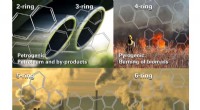
The RMIT team avoided simply adding raw coffee grounds to concrete—a method that would offer little structural benefit—by first subjecting the waste to pyrolysis. This process heats the grounds in an oxygen‑free environment, transforming them into biochar that boasts a porous, high‑surface‑area structure akin to charcoal.
Two pyrolysis temperatures were tested: 662 °F (≈ 356 °C) and 932 °F (≈ 500 °C). Remarkably, biochar produced at 662 °F, when used to replace 15 % of the sand in a conventional mix, produced concrete that was 29.3 % stronger than the control. Biochar from the higher temperature (932 °F) was less effective, underscoring the importance of precise temperature control for optimal performance.
The enhanced strength is attributed to the microstructure of the coffee biochar. Its high surface area and porosity improve bonding with the cement paste, enhancing interfacial adhesion and overall matrix cohesion.
While long‑term durability under extreme conditions—such as temperature cycling and abrasion—remains to be fully evaluated, preliminary results are encouraging. Professor Jie Li, lead researcher, notes, “The continued extraction of natural sand from riverbeds and coastlines imposes severe environmental strain. Developing sustainable alternatives like coffee‑based biochar is critical for maintaining a viable supply of building materials.”