Kinga Krzeminska/Getty Images
We may receive a commission on purchases made from links.
Microplastics—tiny plastic particles smaller than 5 mm, as defined by the National Oceanic and Atmospheric Administration’s Marine Debris Program—have become an invisible yet pervasive threat. They appear in the food we eat, the air we breathe, and increasingly in the water we drink, disrupting marine ecosystems and entering the human food chain.
In a recent paper published in Environmental Science & Technology Letters, researchers from Guangzhou Medical University and Jinan University in China uncovered a surprisingly simple solution: boiling tap water. The team spiked tap water with microplastics and nanoplastics (particles smaller than one micron) before boiling and filtering it. Afterward, the remaining water was found to contain up to 90% fewer plastics than the original sample.
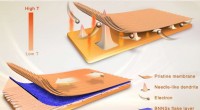
The trick hinges on the chemistry of boiling. As water heats, calcium carbonate—commonly known as limescale—precipitates. This mineral coats the microplastics, forming aggregates that can be easily captured by a standard 0.22‑micron nylon mesh filter. The study used a Simsii nylon membrane filter to demonstrate the effect, but similar filters are widely available online.
Microplastic contamination has been identified in bottled water, tap water, and even human tissue. Conventional removal methods are costly and complex, but boiling offers a practical alternative. The elevated temperature drives calcium carbonate formation, which binds to the plastic particles and locks them into larger clumps that conventional filters can capture.
Not all water behaves the same. The research highlighted that hardness—the concentration of dissolved calcium and magnesium—plays a critical role. In harder water, the calcium carbonate layer forms more readily, yielding removal rates up to 90%. Softer water, with fewer dissolved minerals, produces less limescale and consequently a lower removal efficiency.
The study surveyed 67 regions across six continents, examining everyday boiling habits. Findings showed that adults and children who routinely boiled water consumed two to five times fewer micro- and nanoplastics compared to those who drank tap water straight from the tap.
Boiling is a time‑honored practice in many parts of Asia and Africa and can be easily adopted in households worldwide. Use a non‑plastic electric kettle or a gas stove to keep energy use and CO₂ emissions low. After boiling, a simple 0.22‑micron nylon mesh filter—or a regular stainless‑steel tea filter—can capture the limescale–plastic complexes. Any chalky residue left in the kettle is merely the mineral deposit that trapped the plastics.
While this method is not a permanent fix for the global plastic problem, it provides a straightforward, low‑cost tool for reducing microplastic exposure at home.
Press here to learn more about effective filters.