Solids
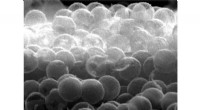
* Very little space: Particles in solids are tightly packed together. They vibrate in place but don't have much freedom to move around. The small spaces between them contribute to their fixed shape and volume.
Liquids
* More space than solids: Particles in liquids are closer together than in gases, but they have more freedom to move around. They can slide past each other, giving liquids their ability to flow. The spaces between particles are larger than in solids but smaller than in gases.
Gases
* Large spaces: Particles in gases are far apart and move freely. They collide with each other and the walls of their container, causing pressure. The large spaces between particles contribute to the ability of gases to expand to fill any container.
Visual Analogy
* Imagine a crowd of people.
* Solids: People are tightly packed and barely move.
* Liquids: People are closer than in a gas, but can still move around a bit.
* Gases: People are scattered widely and move freely.
Key takeaway: The spaces between particles directly affect the properties of matter, such as density, compressibility, and ability to flow.