Basic Reaction:
The primary reaction involves the oxidation of iodide ions (I⁻) by iron(II) ions (Fe²⁺):
2FeSO₄(aq) + 2KI(aq) → Fe₂I₄(aq) + K₂SO₄(aq)
Explanation:
* Iron(II) ions (Fe²⁺) are oxidized to iron(III) ions (Fe³⁺).
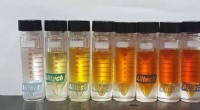
* Iodide ions (I⁻) are oxidized to iodine (I₂) forming a brown solution.
* Potassium sulfate (K₂SO₄) is formed as a byproduct.
Further Reactions:
* Formation of iron(III) iodide (FeI₃): The initially formed iron(II) iodide (FeI₄) is unstable and further reacts with iron(II) ions, producing iron(III) iodide (FeI₃).
* Formation of iodine: The reaction also generates iodine (I₂) which is a brown-colored solid.
Observations:
* The solution initially turns brown due to the formation of iodine.
* If the reaction is carried out in the presence of air, the iodine may oxidize to form iodate (IO₃⁻) ions, which are colorless.
Important Note: The actual products and their proportions can vary depending on the reaction conditions, including temperature, concentration, and presence of other reagents.
Overall:
The reaction of iron(II) sulfate with potassium iodide is a complex redox reaction that produces a mixture of products including iodine, iron(III) iodide, and potassium sulfate.