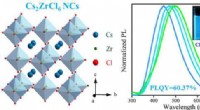
Factors Influencing Crystal Form:
* Substance: Each chemical compound has a specific crystal structure it prefers to form. This is governed by the arrangement of atoms and their bonding.
* Solution Conditions:
* Temperature: Higher temperatures generally lead to faster growth and less perfect crystals.
* Concentration: Saturated solutions favor crystal growth, while dilute solutions might lead to smaller or irregular crystals.
* Solvent: The solvent used can influence crystal form.
* Impurities: Even trace amounts of other substances can significantly affect crystal morphology.
* Nucleation: How and where the initial crystal seeds form can impact overall crystal shape.
Unique vs. Similar:
* Unique: In an ideal scenario, a pure compound under strictly controlled conditions can yield a unique crystal form. This is often used for identifying substances in analytical chemistry.
* Similar: Even with the same substance, variations in the conditions mentioned above can lead to slight variations in crystal size, shape, and habit (overall appearance). These variations might still be recognizable as belonging to the same crystal system (e.g., cubic, hexagonal, etc.).
Examples:
* Salt (NaCl): Typically forms cubic crystals, but conditions can lead to variations in the appearance of the cube (flat, elongated, etc.).
* Quartz (SiO2): Known for its hexagonal crystals, but again, slight variations in growth patterns can lead to different forms.
In Conclusion:
Crystals precipitated from a solution *can* have unique forms, especially if the conditions are controlled. However, variations in conditions are common, leading to more subtle differences in crystal appearance rather than entirely unique forms.
It's important to remember that the fundamental crystal structure (how atoms are arranged) for a given compound is usually consistent, but the external shape and appearance of the crystal can vary significantly.