* Polarity: Phenol is a weakly acidic compound due to the hydroxyl group (-OH). It forms hydrogen bonds with water, but the interaction is not as strong as with ionic compounds. Sodium phenoxide, on the other hand, is an ionic compound formed when phenol reacts with a strong base like sodium hydroxide. The presence of the negatively charged phenoxide ion (C6H5O-) makes it highly polar and therefore more soluble in polar water.
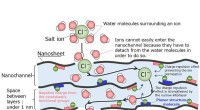
* Intermolecular Forces: Sodium phenoxide ion interacts with water molecules through strong ion-dipole interactions, which are much stronger than the hydrogen bonding that occurs between phenol and water.
* Dissociation: Sodium phenoxide ion completely dissociates into sodium ions (Na+) and phenoxide ions (C6H5O-) in water, increasing its overall solubility.
In summary:
* Sodium phenoxide is ionic and highly polar, leading to stronger interactions with water molecules.
* Phenol is weakly acidic and less polar, resulting in weaker interactions with water.
Therefore, sodium phenoxide ion is more soluble in water than phenol.