* Solutions are a specific type of mixture. They are homogeneous mixtures, meaning the components are evenly distributed throughout. Think of salt dissolved in water – you can't see the individual salt particles.
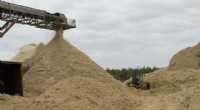
* Other mixtures are heterogeneous. This means the components are not evenly distributed. You can often see different parts of the mixture. Think of sand and water – the sand settles to the bottom, and you can clearly distinguish between the sand and water.
Here's a breakdown of the differences:
Solutions:
* Homogeneous: Components are evenly distributed.
* One phase: The mixture appears uniform throughout.
* Transparent: You can see through the mixture.
* Components can't be easily separated: Requires techniques like evaporation or filtration.
Other Mixtures (Heterogeneous):
* Heterogeneous: Components are not evenly distributed.
* Multiple phases: You can see different parts of the mixture.
* May be transparent or opaque: Depends on the components.
* Components can often be separated: By simple methods like decantation, filtration, or magnetism.
Examples:
* Solution: Sugar dissolved in water, air (gases dissolved in gases)
* Heterogeneous mixture: Sand and water, oil and water, salad dressing
Let me know if you'd like to explore any of these examples in more detail!