Solids:
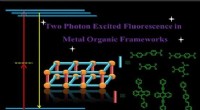
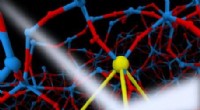
* Particle Arrangement: Particles in a solid are tightly packed together in a regular, repeating pattern (crystal lattice).
* Movement: Particles vibrate in place, but they don't move around freely. This is why solids have a fixed shape and volume.
* Forces of Attraction: Strong intermolecular forces hold the particles together, making them very difficult to compress.
Liquids:
* Particle Arrangement: Particles in a liquid are closer together than in a gas, but not as tightly packed as in a solid. They can move around each other, giving liquids a fixed volume but not a fixed shape.
* Movement: Particles move more freely than in a solid, but they still experience some attractive forces.
* Forces of Attraction: The intermolecular forces are weaker than in solids, allowing the particles to flow.
Gases:
* Particle Arrangement: Particles in a gas are far apart and move randomly.
* Movement: Particles have high kinetic energy and move at high speeds in all directions.
* Forces of Attraction: Intermolecular forces between gas particles are very weak, allowing gases to expand to fill their container.
* Compressibility: Gases are highly compressible because there is a lot of space between their particles.
In summary:
The differences in the states of matter are due to the strength of the intermolecular forces between particles and the amount of kinetic energy they possess. Solids have the strongest forces and the least kinetic energy, while gases have the weakest forces and the most kinetic energy. Liquids fall in between.
Remember, this is a simplified explanation. There are many other factors that influence the states of matter, such as pressure and temperature.